
Word Tiles - Relaxing Puzzle review
 Analysis by GetAllApps
I approached Word Tiles - Relaxing Puzzle expecting a straightforward word game: look at a set of tiles, spot a word, and keep going. That simple premise is the heart of its appeal. Published by Agave Games, this free puzzle game is built around word tiles rather than elaborate rules, so it feels easy to pick up when I want a quiet break. The important question is whether that basic action stays satisfying beyond the first few rounds. For me, the answer comes down to its gentle rhythm: make a choice, see the puzzle respond, enjoy the small sense of progress, then decide whether to play again.
From a glance at the tiles to the first word
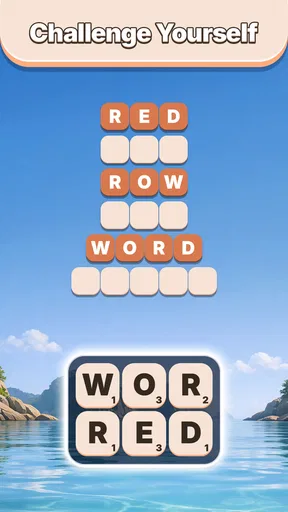
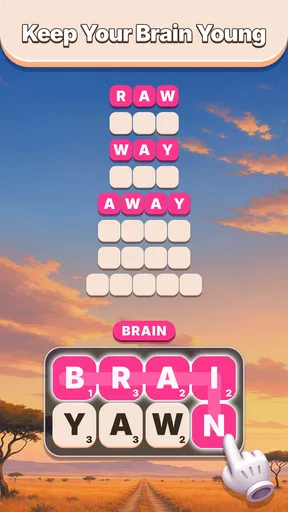
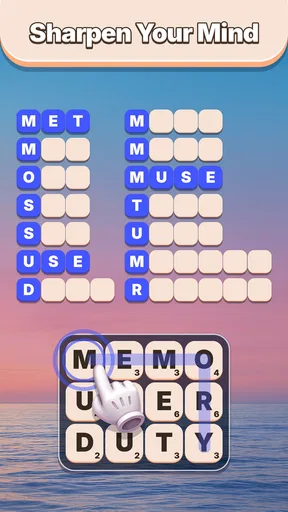
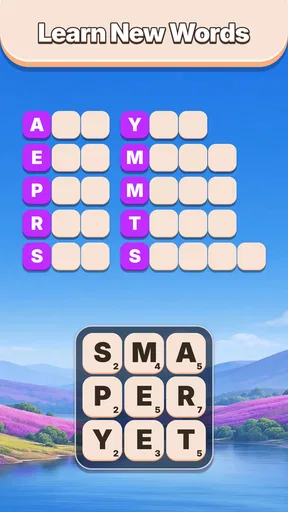
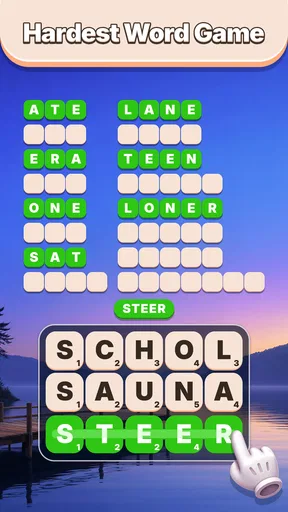
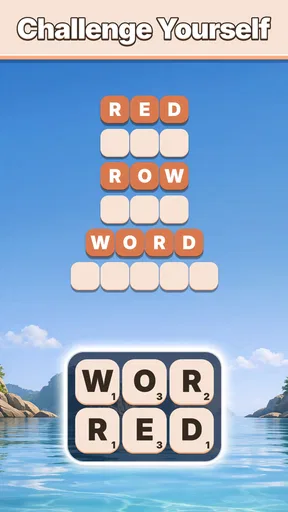
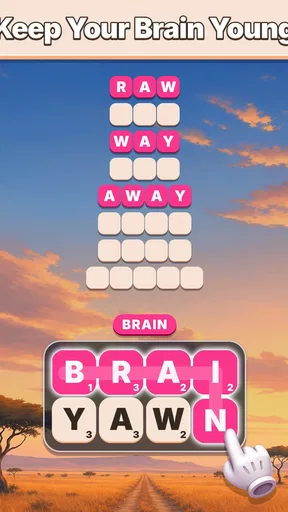
The first step in a word-tile puzzle is wonderfully direct. I look over the letters, try possible combinations, and select the word that seems to fit. There is no need to learn a complicated system before I can participate. The game’s identity is clear from the start: this is a word puzzle game focused on forming words from tiles, with an emphasis on a relaxed rather than frantic experience.
That accessibility makes a difference. Word games can sometimes feel like tests, especially when they demand speed or a large vocabulary right away. Here, the basic premise gives me room to pause and consider the available letters. I can approach a puzzle one possibility at a time instead of treating every moment as a race. The result feels welcoming for casual players as well as people who already enjoy word searches, spelling challenges, and other language-based puzzles.
In a typical round, the tiles are the invitation: scan them, notice a promising sequence, and act on it. The satisfaction begins before I have even found the answer, because the process of testing letter combinations is part of the activity. I might see one obvious word immediately, then take a little longer over another. That small shift from recognition to deliberation gives the puzzle its texture without making the rules feel burdensome.
A simple action with room to think
The appeal of Word Tiles - Relaxing Puzzle is not that it asks me to master a sprawling set of mechanics. It is that a familiar action—finding words—can remain engaging through attention and pattern recognition. I am constantly weighing what the letters might make, and each successful choice gives me a clear signal that I am moving through the puzzle.
That clarity is useful when I only have a few minutes. I can open the game, understand what I am meant to do, and focus on the letters rather than searching through layers of instructions. It also makes the experience easy to share in spirit: someone who enjoys word games can understand the central idea without needing a long explanation. The game’s store summary is simply “Word Puzzle Game,” and that description suits the experience’s straightforward focus.
Because the core action is so familiar, the enjoyment depends on how it feels to repeat it. I find that the tiles encourage a calm kind of concentration. I am not switching between unrelated tasks or managing a collection of systems; I am looking for words and responding to what the puzzle presents. That focus is a good match for the relaxing tone suggested by the game’s name.
The rhythm: action, feedback, and small rewards
A strong casual puzzle loop needs more than a recognizable premise. It needs to make each decision feel connected to what happens next. In a word-tile game, the rhythm is easy to understand: I inspect the letters, choose a word, see the puzzle react, and use that feedback to keep working. The action is small, but the response gives it weight. When a choice fits, I get the pleasing sense that I have made progress rather than merely tapping at random.
That feedback also helps me stay oriented. Word puzzles can be frustrating when the player is unsure whether a guess was understood or whether the task has changed. The appeal here lies in the direct relationship between spotting a word and seeing the game acknowledge that move. It keeps my attention on the next useful choice. Even when I take longer to find an answer, the puzzle’s central language-based challenge remains easy to grasp.
The reward is not necessarily a dramatic spectacle; the enjoyment is in completing a piece of the puzzle and feeling the board move closer to resolution. I like that kind of modest payoff. It is substantial enough to make the effort feel worthwhile, but it does not turn a calm word game into something that demands a high-energy response. Each solved word contributes to a little run of progress, and that run is often what makes me want to continue.
Why solving a word feels satisfying
Finding a word asks me to combine two kinds of thinking. First, I need to recognize the letters that are present. Then I need to decide how they might fit together. Sometimes the answer is immediate; at other times I have to rearrange the possibilities in my head. That mix of quick recognition and slower consideration is a dependable source of satisfaction, especially when a word finally appears after I have overlooked it for a moment.
The feedback rhythm can make even a modest success feel earned. I am not just watching a sequence unfold: I have contributed by reading the tiles and making a choice. That sense of agency is central to why word puzzles work so well as short-session games. A successful move confirms that I understood the letters, while the remaining puzzle gives me a new question to answer.
For players who like a low-pressure challenge, this is a welcome balance. The game invites concentration but does not need to feel like a formal vocabulary exam. I can enjoy the act of searching without worrying about turning every round into a performance. The relaxing puzzle angle comes through in that measured pace: the game gives me a reason to focus, while the simple loop leaves space to play at my own speed.
Progress is the hook, not noise
There is a practical reason a small reward can be enough. A word game’s pleasure often comes from reducing uncertainty: at first, several letter combinations seem possible, then one of them clicks. The moment of recognition is the payoff. When I make a correct choice, I get to enjoy both the answer and the progress that follows from it. That makes the next puzzle feel like a fresh opportunity rather than a chore.
It also gives the experience a natural stopping point. I can finish a round and feel that I have completed something, even if I do not want to stay for a long play session. That matters for a game designed around a repeatable, accessible idea. The reward is contained within the puzzle, so I can appreciate a small burst of progress and then put the game down without needing a larger commitment.
There is a particular pleasure in realizing that the answer was close all along. I may have looked at the same tiles several times before seeing a word that suddenly seems obvious. That delayed recognition makes the solution feel personal. The game gives me the prompt, but the little spark of discovery belongs to me—and it is an effective reason to try another set of letters.
Resetting the session and deciding to play again
Once a puzzle has been completed, the loop has a built-in reset: the next round offers another set of letters and another chance to search. That change is important because repetition alone can become dull. A new arrangement restores the central question—what words can I find here?—and gives my attention somewhere fresh to go. The action stays familiar, but the specific problem changes, which is exactly the sort of variation a simple puzzle needs.
I find that this makes the game easy to revisit. I do not have to remember a complex plan from an earlier session or prepare for a long sequence of tasks. I can return, look at the tiles, and begin reasoning again. That low-friction restart suits moments when I want something engaging but not demanding. It also explains why the game can work both as a quick diversion and as a longer stretch of casual puzzle play, depending on my mood.
The reason to begin another session is not mysterious: I want to see what the next arrangement asks of me. The previous solve gives me a small sense of completion, while the next puzzle offers a new target. This action-feedback-reward-reset sequence is the game’s most persuasive feature. It is compact, understandable, and easy to repeat without requiring a dramatic change in how I play.
Who is likely to enjoy the loop?
Players who enjoy word games will recognize the appeal immediately. If you like examining letters, trying combinations, and feeling pleased when a solution falls into place, the central activity should feel familiar in a good way. It can also suit people who want a gentle alternative to games that rely on fast reactions or complex controls. The challenge comes from language and observation, which gives the experience a more thoughtful pace.
It is also approachable for someone who is simply curious about word tiles. The store’s short description, “Word Tiles,” captures the concept without overselling it: the letters are the focus, and the player’s job is to find words. Rated for Everyone, the game is positioned for a broad audience. That makes it an easy recommendation to consider for a shared device or for anyone who wants an accessible puzzle to pick up without a steep learning curve.
The game is free to download, with in-app purchases priced from $1.99 to $49.99 per item. That is worth keeping in mind when deciding how you prefer to engage with mobile games. The core idea remains easy to understand on its own: find words from tiles, take satisfaction in each successful choice, and continue when the next puzzle catches your interest.
How it stands out as a casual word game
Among puzzle games, word-tile experiences have a particular advantage: the rules can be simple while the act of solving still feels personal. I bring my own vocabulary, habits, and ways of spotting patterns to each round. One player may identify a word at a glance, while another may work through several possibilities. That flexibility gives the same basic task room to feel different from one person to the next.
Agave Games has a clear premise to build on, and the game’s popularity suggests that many players have found the format appealing. It has more than 1 million installs, with an average rating of 4.9 from around 44,000 ratings. Those figures are encouraging context for anyone browsing for a word tiles game, although my own recommendation rests most on the directness of the play loop: it is easy to understand why a solved word feels good and why a new puzzle invites another look.
The current version is 1.6.4, and the game requires Android 10 or later. It was released on July 24, 2026. Those details are useful when checking whether it fits a device, but the day-to-day appeal remains the puzzle itself. I value that separation: the practical requirements tell me whether I can play, while the letters and the solving rhythm determine whether I want to keep playing.
A calm pace with a clear purpose
What I appreciate most is that the experience has a clear purpose at every stage. Before a move, I am searching. During a move, I am committing to a word. Afterward, I can see the effect and decide what to tackle next. When the puzzle is done, I can stop or begin again. That sequence keeps the game from feeling aimless, even though the underlying task is intentionally uncomplicated.
There is also something satisfying about a mobile game that does not need to overwhelm its premise. Word Tiles - Relaxing Puzzle is at its best when it lets the word search do the work. It gives me a focused activity, a modest challenge, and a reason to enjoy the result. If I am in the mood for a puzzle that asks me to think without demanding complicated preparation, that combination is appealing.
Of course, the same simplicity will not suit everyone. Players looking for action-heavy gameplay, complex strategy, or a wide range of unrelated activities may find the word-focused format narrow. But that is also part of its identity. The game is not trying to distract me with a different kind of task every few minutes; it invites me to stay with the tiles and make progress through words. For people who enjoy that kind of focus, a consistent loop can be a strength.
My verdict on the word-tile loop
Word Tiles - Relaxing Puzzle works because its central cycle is easy to feel: inspect the tiles, find a word, receive a clear sense of progress, and decide whether the next puzzle deserves another session. That loop gives the game its momentum without making the experience feel complicated. I like the way it combines simple actions with moments of genuine recognition, especially when a word clicks after I have been considering the letters for a while.
For me, its best use is as a calm, repeatable puzzle break. I can start without a long learning period, focus on a single type of challenge, and stop after a satisfying round. The game’s free-to-play format makes it accessible to try, while the listed in-app purchases are something to note before installing. Its broad age rating and straightforward word-based premise make it easy to understand who might enjoy it.
If you enjoy spelling, pattern recognition, and the small reward of solving a word puzzle, this is a solid option to explore. It is not a complicated game, and it does not need to be. The tiles provide the question, my choices create the feedback, and each completed puzzle gives me a reason to consider one more. That is a simple promise, but it is exactly what makes this relaxing word puzzle easy to return to.
Pros and cons
Pros
- Simple rules make it easy to start playing.
- Short rounds suit quick breaks.
- Word challenges can help build vocabulary.
- Relaxing visuals create a calm atmosphere.
- Progressive levels offer a steady challenge.
Cons
- Later puzzles may feel repetitive.
- Some levels can be difficult without hints.
- Hints may be limited or require rewards.
- Ads can interrupt the flow of play.
- A network connection may be needed for some features.


